http://www.kingcorn.net
This was a great movie, available via the Netflix instant online view application.
Follows one acre of corn in Iowa for a season, tracing how this crop is grown, how it has affected small town America, and how it is finding its way into everything that we eat and especially drink. Very worthwhile to watch - at least the trailer, which is available at the movie's website - http://www.kingcorn.net/
Showing posts with label Sustainable Agriculture. Show all posts
Showing posts with label Sustainable Agriculture. Show all posts
Sunday, September 14, 2008


Saturday, September 13, 2008
Email Interview - Paso Robles
I was contacted by a writer doing a story on EOS winery for a Swedish wine publication (apparently, we export a fair bit of wine there?) She wanted to do a sort of email interview as a preliminary, and came up with some questions to start the conversation - since I put some thought into the answers, and since they sum up a lot about how I feel about Paso Robles and Sustainable Agriculture, I am putting them up here as well for friends to see and comment upon. Cheers!
1.
1. Please tell me about your background in the winemaking business.
· I trained at University to be a Marine Biologist; I have always been fascinated by the natural world and the way natural systems find their own order. To pay my way through college, I began to work in restaurants where wine was a central feature of the dining experience, and to taste seriously with and learn from the experienced staff members. In this way, I really came at wine from the restaurant side, and this eventually presented me opportunity to enter wine production professionally. I was working in Santa Barbara at Michel Richard’s restaurant Citronelle, when I met some of the people from Sanford winery, just over the mountains in the lower Santa Ynez Valley, (now the Sta. Rita Hills AVA.) I had always loved their wines, and volunteered to help by cleaning out tanks, or rolling barrels around; whatever I could do to learn more about how wine was made. I was given a 2-day a week job, and once exposed I never looked back. This industry was very welcoming; it was a good fit for my scientific side, yet offered a creative outlet in a way that the world of academic science didn’t do; being able to look back at the end of the day or week, or year and say ‘Hey, we did this!’ And being in an agricultural pursuit felt entirely natural to me, as I grew up within the cycles of seasons and in close dependence upon the earth. I bit the bullet, and left the world of restaurants to take a minimum-wage job with another Central Coast winery, and it was one of the best decisions of my life so far. From that point, I have worked primarily on the Central Coast, with one vintage spent in Oregon. My most recent position was as winemaker for a company that had their own 750 acre estate Pinot Noir and Chardonnay vineyards, as well as a large two-facility custom winemaking operation which made wines for companies throughout California and the world. This was a great place to see how the ‘big guys’ played the game, and to work with fruit of all quality levels from throughout the premium winegrowing regions within California. I got involved at every level and in every aspect of the world of wine business and wine technology.
2. You decided to join EOS Estate Winery in April 2008, what was you
main motivation behind this decision and what do you hope to
accomplish?
· I’ve always believed that if you push yourself to excel and refuse to play small because it feels ‘safe’ you will be presented with opportunity to positively affect the world around you. I look around and see how the consolidation in the world wine business is really squeezing farmers and small wine businesses – these corporations need to present their shareholders with profits, and they often find the profit at the expense of their grower partners. When Sapphire Brands acquired EOS Estate last year, and announced plans to take it to 100% solar-powered, I knew that this was a company that was ready to do things the right way. EOS is a large enough winery (~4000 tons annually) to have an important impact, for the better or for the worse, upon the Paso Robles appellation – and I am determined to be a part of steering this thing in the right direction. We are putting a lot of wine into the world-wide marketplace with the words “Paso Robles” on the label, and I owe it to all my growers, and to all the other winemakers and wineries around us to make sure that those words stand for quality, for excellence, for value, and for environmentally and socially responsible choices. At the same time, we are really just the ‘little guys’ in the world of wine – we have to work harder, think smarter, be more nimble and turn out better quality in order to compete in a world where we have very little weight to throw around with distributors and ‘Chain’ accounts, and no budget to ‘buy’ our way in. We rely upon relationships as number one priority – with our growers, with our distribution partners, with our employees, and with our customers. Relationships are maybe even more important to our business than our buildings, vineyards and equipment.
3. What, in your opinion, makes EOS and its wines unique? What is your
proudest achievement during your time at EOS?
· EOS draws from vineyards throughout the large Paso Robles AVA – this gives us access to very diverse vineyard resources, and to diverse people with varied viewpoints on how to best achieve quality – some of the best minds in sustainable agriculture are working with us on a daily basis. I was drawn to EOS by the even hand and consistent quality which has been their hallmark – elegance and understatement stylistically, and a commitment to putting top quality wine into bottle at a price that is approachable for everyone. We are in a period of change currently, but when the medium is wine, change always comes slowly – over the course of years, rather than weeks or days. In that context, I am really just at the beginning of my time here, and though there have been important achievements, they are mostly of the sort that will show dividends in several years, rather than immediately. I have really set to work on defining stylistic goals for our winemaking – many winemakers will give good verbiage about “listening to the grapes, and letting them become what they wish to be.” Well, as one of my mentors in this business likes to say, “what grapes really want to do is to become vinegar, not wine!” Quality wine starts with time spent in the vineyard, and with clearly communicating expectations to the growers and vineyard managers, and hearing and learning from their experience. By the time the fruit arrives at the winery, my ability to affect the final outcome of the fruit is minimal – it is more about preserving the quality that is already inherent in the grape; I can’t increase the quality through what I do in the cellar, I can only avoid harming it. Stylistically, I want to refine our goals further, and bring a touch more modernity to our wine style. I’ve travelled to wine regions around the world over the past several years, and there are two main things that just this summer struck me and will define my winemaking to some extent; A.) We can sometimes take our wines too seriously in California, everyone is chasing the next ‘impressive’ wine. Traditional wine regions certainly have their share of these, but they also have a great hand with just plain ‘likeable’ and delicious everyday wines, and B.) Many California wineries try to define themselves as ‘Burgundian’ or ‘Bordeaux’ or ‘Italian’ in style – almost in the way that decades ago, American restaurants only felt that they could be of quality if they had a French or Italian name, menu, and décor. Those days are over for cuisine; chefs everywhere have embraced their own local heritage and ingredients, and it is time for the wine business to have some brave companies and winemakers step forward and proudly show our own style, our own ingredients, and contribute something unique to the world of wine – this is happening slowly too, but gathering force.
4. Please tell me about your views on sustainable agriculture and how
this affects your work at EOS.
· I grew up in rural Minnesota at the time that the small family farm was going extinct one by one as the suburbs sprawled, and the next generation went off to work in more financially lucrative careers. Both sets of my grandparents had farms of less than 500 acres each, but they also had outside jobs that made that possible – they farmed more out of tradition and love of the land than for the income that was derived from their efforts. Of their children, only 3 have continued to be involved in agriculture – two in agricultural support careers, and one uncle farms part-time the original family place built by my great-great grandfather when he arrived from Sweden in the late 1800’s, in addition to his career in technology in Minneapolis. I believe that I am the only member of my generation that is still involved in agriculture at all. In Paso Robles, agriculture is still viable for small farmers because the wine business depends upon, and rewards quality. Industrial agriculture has encouraged and stimulated the creation of standardized commodity markets for many agricultural products in the United States to the point that yield and efficiency are the only attributes that are rewarded by the market. Under these systems, large, ‘efficient’ companies using high levels of chemical inputs and operating on tight margins are driving smaller farmers out of the arena. I hope that we can work with and reward growers of all sizes whom are committed to quality and sustainability – the Central Coast has been at the forefront of sustainable agriculture in vineyards, and some of our growers are in the pilot program for the Central Coast Vineyard Team’s “Certified Sustainable” effort. By coming up with an objective certification program, hopefully the market will financially reward growers who are going to the extra steps to ensure that they are doing the right thing for our business and our environment for the long-run.
5. Which are the key advantages of winemaking in Paso Robles? The main
challenges (if any)? Please give a brief description of the region´s
climate and weather patterns and how these affect the quality of the
grapes and wines.
· The Paso Robles AVA is a relatively large appellation, with a lot of variation in soils, local climate, topography, and viticultural philosophy. This is both a blessing and a challenge – you can not apply the same technique in two vastly different locations and expect the same result. Though the old standard grape varieties of Cabernet Sauvignon, Merlot, and Chardonnay are still the dominant plantings locally, there are growers experimenting with nearly every variety imaginable; varieties native to Italy, France and Spain, as well as ‘American’ varieties such as Zinfandel and Petite Sirah – some of these vineyards now have vines of great age. Rhone and Mediterranean grape varieties have really attracted a lot of attention here locally, and seem to fit perfectly into our climate and growing conditions. There are relatively few serious pests to deal with compared to other regions, so chemical usage is very minimal and generally selected for ‘soft’ chemistries. The basic climate is balanced on a razor’s edge between the cool Pacific Coastal region just over the Santa Lucia Mountains to the West, and the hot, dry inland climate of the southern San Joaquin Valley about 2 hours drive inland to the East, (it’s about 15-20 miles through the mountains between the town of Paso Robles to reach the ocean.) The days are hot during the growing season – 95-105F degrees is quite common; but as the inland regions heat up, the rising air pulls in cool breezes and fog from the Pacific (year-round temperature of about 48-55F degrees,) through several gaps in the mountains, which cools the entire region beginning an hour before sundown or so. Nights here are generally cool, around 50-55F degrees. Warm days help to build rich fruit flavors and soft tannins into the grapes on the vine, while discouraging fungal diseases, and the cool nights help to preserve color and aroma, and allow the vines to recover water and mineral balance and ‘catch-up’ from the heat of the day.
6. What, in your opinion, makes Paso Robles such a thriving viticultural region?
· It’s the people. The Paso Robles wine region is populated by passionate, determined people from a variety of backgrounds who are dedicated to constant improvement of farming, winemaking, and marketing our wines to the world. We have a world-class Agricultural & Business University in the form of Cal Poly just 25 minutes to the south, and their newly-formed Enology and Viticulture department is already releasing dynamic, enthusiastic young people into the industry throughout the state. Though Paso has in the past sent much of its fruit north to the big wineries who use our vineyards as sources for large regional blends, there is a trend toward more and more of the fruit being fermented and marketed by local vineyards who proudly proclaim “Paso Robles” on the label. There are small wineries who have become the darlings of the media as they push the limits of viticulture and enological style, attracting attention to the entire region. And there are larger wineries whom have shown how strongly the wines from this region can compete on a national stage. We are still working on increasing the knowledge of our region with the average wine consumer – we aren’t as recognizable as Napa or Sonoma yet, and we will always have a different meaning in people’s minds than those areas. But we are building our reputation by leaps and bounds, and are rapidly becoming an exciting new quality and value region that wine drinkers are embracing and enjoying and sharing with their friends, and making a part of their lives. We are a leader in responsible environmental vineyard development and management – we are a choice that people can be comfortable making. This is a dynamic and constantly developing region – stay tuned as we continue to define ourselves and push quality higher – I’m excited to be a part of the coming years!
Sunday, June 29, 2008
O2 Wine & MacroWine

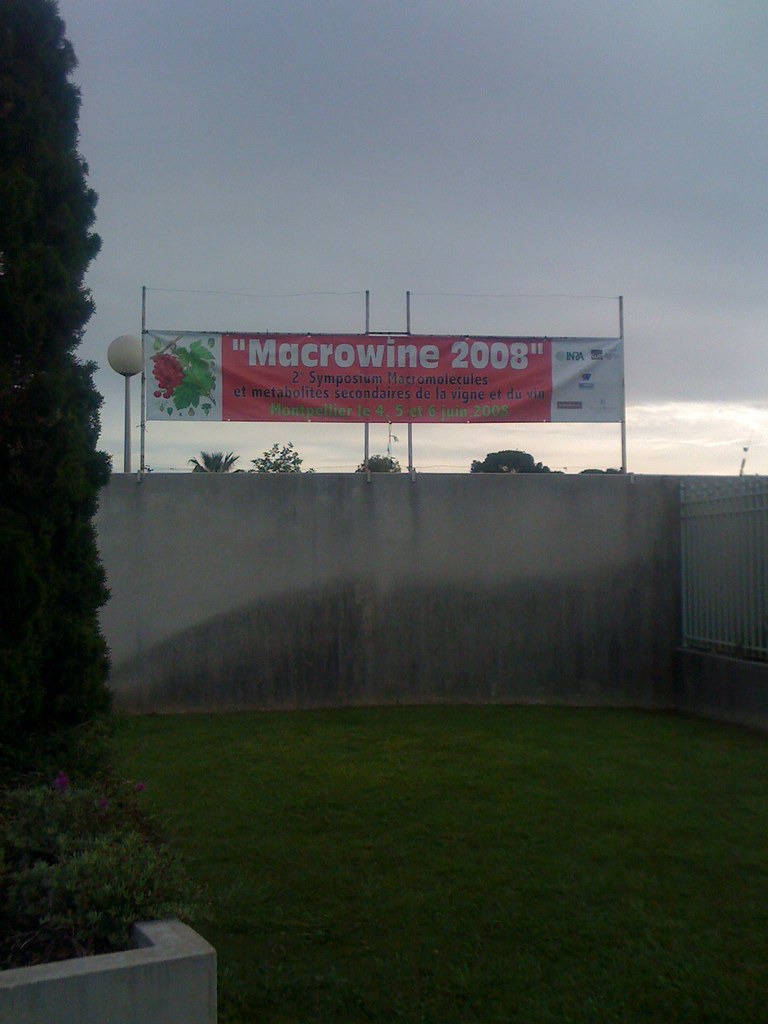
I realize that I have neglected to mention much about the very reason that I ended up in Montpellier. I was in town to attend two wine science conferences – the first, ‘O2 Wine,’ was the first annual gathering of an industry / academic partnership by the same name which is dedicated to defining and in some cases funding needed research into the interaction of oxygen in wine at all stages from crush through bottle aging. It is made up of members from primarily industrial equipment and materials suppliers, as well as laboratories and scientists affiliated with the top wine universities and research institutions in Germany, Australia, France, South Africa, Spain and the United States. The second conference is called ‘MacroWine’ and it is the second annual meeting of this group, which has a similar mission, but is more related to uncovering the secrets of macro-molecules in wines, such as tannins, polyphenols, colloids, proteins, and protein / phenol complexes and the way that they influence wine quality, sensory perception, and stability.
(I was invited to attend by a synthetic closure company whom I have been in contact with following (or rather during, as it is still ongoing,) a production-level trial in which I have been following the development and aging of a wine that was finished with a variety of closure types, including screwcaps, synthetic corks, natural corks, and an engineered cork closure. All of these products allow varying amounts of oxygen into the bottled wine during aging, and thus provide different rates of oxidation, different life spans for the wine, and different sensory results in what was at one time an identical wine.)This was a pretty heavy week of information – much of what was presented was very academic and assumed a daily familiarity with the subtleties of organic chemistry, protein and enzyme synthesis and activity. It was very cool to be seated in a room with some of the best names in wine science – I seriously know most of these guys from reading the papers that they have published in AJEV and other research publications that are becoming foundational to these fields of research. Several of the presentations dealt with laying the basics – what are the best methods to categorize and measure such complex and diverse groups of chemical species – the scientific equivalent of building a language that can be understood and used by all who are pursuing research in these areas. Secondly, these kinds of meetings of the best like-minded scientists in the world can only lead to more rapid advances and better understanding for the industry as their discoveries are shared and cross-pollinate and illuminate one another. The industry affiliates whom are largely funding this group are also poised to be the first to benefit as they incorporate and have access to the minds and information that are involved.
I am sure that this will lead to better products, better understanding, more rational winemaking, and ultimately better wine made in a more efficient way in the future. Not quite at the level of curing cancer, (although some of the phenols involved are being shown to do just that, so who knows!) but I believe that better wine is a cause we can all get behind!
The conferences were hosted at the INRA (Institute National for Research Agricultural) which is certainly well-known as the birthplace of many wine-related improvements. Many of the specific yeast strains that are used worldwide, many of the certified rootstocks and grapevine scions were developed here, and it was very cool to walk along the edge of the experimental vineyard.
Montpellier is actually a strong center of Agricultural research of many kinds – SupAgro (the specific part of the INRA that we met at,) is the nickname for the top agricultural school (Superior Agronomy, or something like that,) in France, and there is another related research facility called Agropolis, basically an academic research campus that is dedicated to developing new ways to farm crops worldwide, with an emphasis on hot-climate agriculture for the developing world, specifically food and cash crops for Africa, Asia, and elsewhere. In addition, this campus hosts one of the most important research projects into the questions raised by agriculture and global climate change. Very interesting place, and very important in the world!
Friday, June 27, 2008
Shatter


2008 is proving to be a tricky year for wine growing in Paso Robles, for a lot of reasons.
With severe frost in the first few weeks after budbreak, many grapevines in the colder areas had their primary shoots frost burned down to the cordon. When this happens, the vine has a safety mechanism - the main bud has secondary and tertiary buds which, while smaller and less robust, at least allow the vine a second chance at getting some shoots and leaf area out for growth during that season. The problem is that these secondary shoots are weaker, and typically contain few viable clusters - and those that actually are able to pollinate and set will be weeks behind the rest of the vine in maturity, making harvest a nightmare of over-ripe and under-ripe side by side on the same vine.
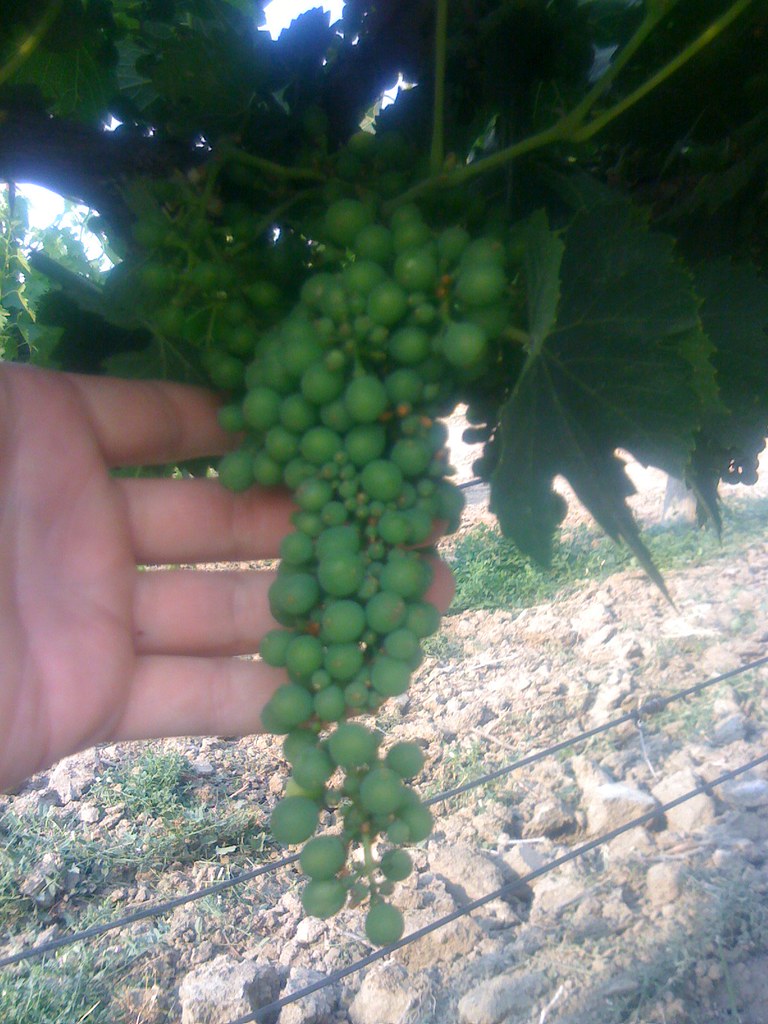
For varieties and locations that escaped frost damage, the extreme swings in temperature have had further implications. Much of Paso Robles' Cabernet Sauvignon (along with other Bordeaux varieties like Cab Franc, Sauv Blanc, and to some extent Merlot,) all seemed to bloom right around the time that warm, balmy weather changed back to cold days and nights with drizzle and overcast. Although grape vines have perfect flowers, (they have male and female parts right on the same flower, so they don't require bees or insects to help with fertility,) they don't do well with cold, wet weather. When this happens, we are left with a lot of "Shatter" the name for the stage at which the vine aborts the unfertilized berries, and when you shake a cluster at this stage, the dried up brown berries fall out of the cluster, leaving only the viable berries behind, reducing the crop sharply. (See the lower photo above - these clusters have 100% shatter, or NO BERRIES AT ALL!)
Sometimes there is incomplete fertilization - the berry fertilizes, but the seed inside doesn't grow. This condition is called "Hen & Chicks" - in the middle photo you can see how the berry size is mixed - some berries are sizing up - they are normal and have 2-3 seeds in each. The small berries do not have viable seeds, and they will remain tiny and sour. If the vine gets stressed, the small berries will become necrotic and fall out of the cluster later in the year. If this doesn't happen until the other berries size up, they can become trapped inside the cluster and promote growth of mold and disease. If they stay living in the cluster, they can go through to harvest and contribute their green, unripe, tart flavors to the wine.
The bottom photo shows the most extreme example of infertility - this is at a block of our Petite Sirah which was frost damaged, and then just recovered when it was hammered by cold weather during bloom. The vine just gave up on reproducing this year, and the clusters have all died and dried up. Very sad, but it is a mechanism that will allow the vine to put all of its energy into storing carbohydrates for next year, when it will make a renewed attempt at carrying a crop load.
Overall, estimates seem to be that we will have a 20-30% smaller crop than average this year locally for Cabernet Sauvignon, and several other varieties will be affected as well. The bigger picture seems similar - there were severe frost events throughout Northern and Central California which should make for a very small overall grape harvest, (and thus potentially higher prices for grapes on the spot market this year, and for bulk wines early next year.)
Friday, June 20, 2008
Say Cheese

Indeed I did! I think that in Spain I was so favorably overwhelmed with the Jamon Serrano / Iberico that the cheese took a backseat - but there were really good semi-hard and mountain cheeses there too.
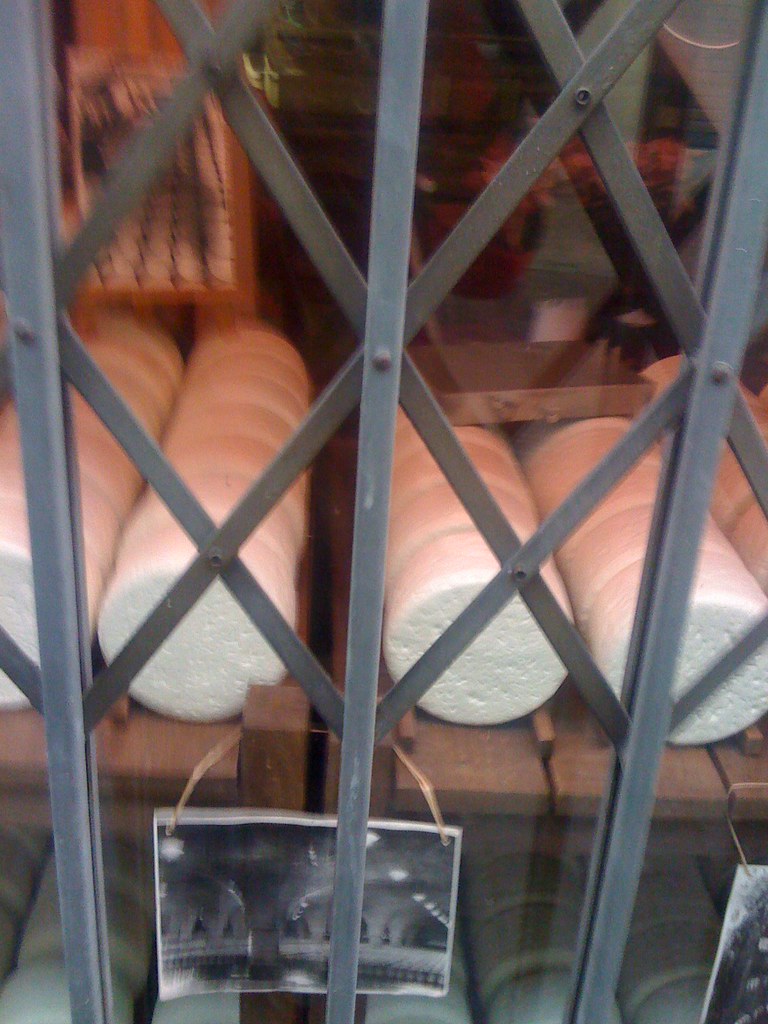
In Montpellier, I visited an affineur, or cheese seller - although here they do much more than simply sell cheeses wrapped up in cellophane - it might be more proper to say that they 'finish' the cheeses here, taking them from relatively young and immature, and bringing them to the glory of full maturity carefully over the course of weeks of time at careful temperature and humidity, delicately turning and washing the rinds, and finally choosing them at just the right moment to be offered to their customers, to be taken home and enjoyed.
The local cheeses of the area are mostly Chevre - small goat's milk cheeses which are semi-soft and range from fruity to pungent. As you can see in the photos, they can take on an almost ashen coat of fungal growth as they approach maturity - this is a beautiful thing, trust me! The aroma in the shop was nearly overwhelmingly delicious - a mix of truffle-like fungal and fresher dairy / goaty aromas.
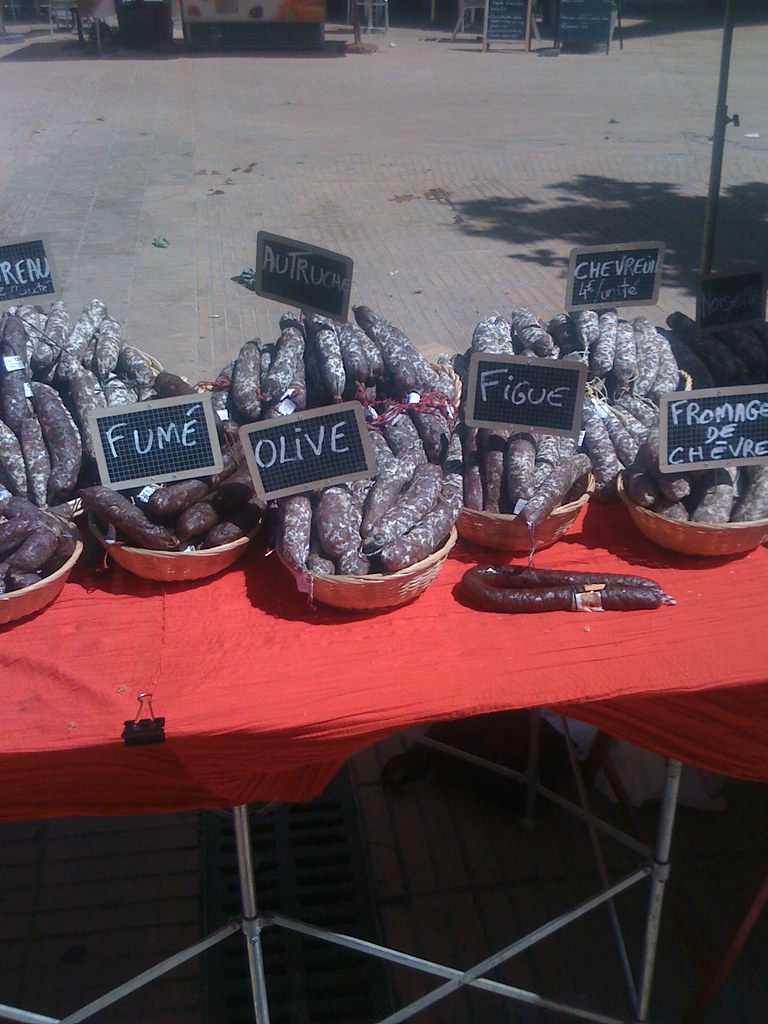
Also of interest were the farm-cured sausages on offer at the outdoor market. Too bad that I was in a hurry and leaving for Avignon in the morning - these looked amazing too - I just had to snap a photo!
Pic-St-Loup

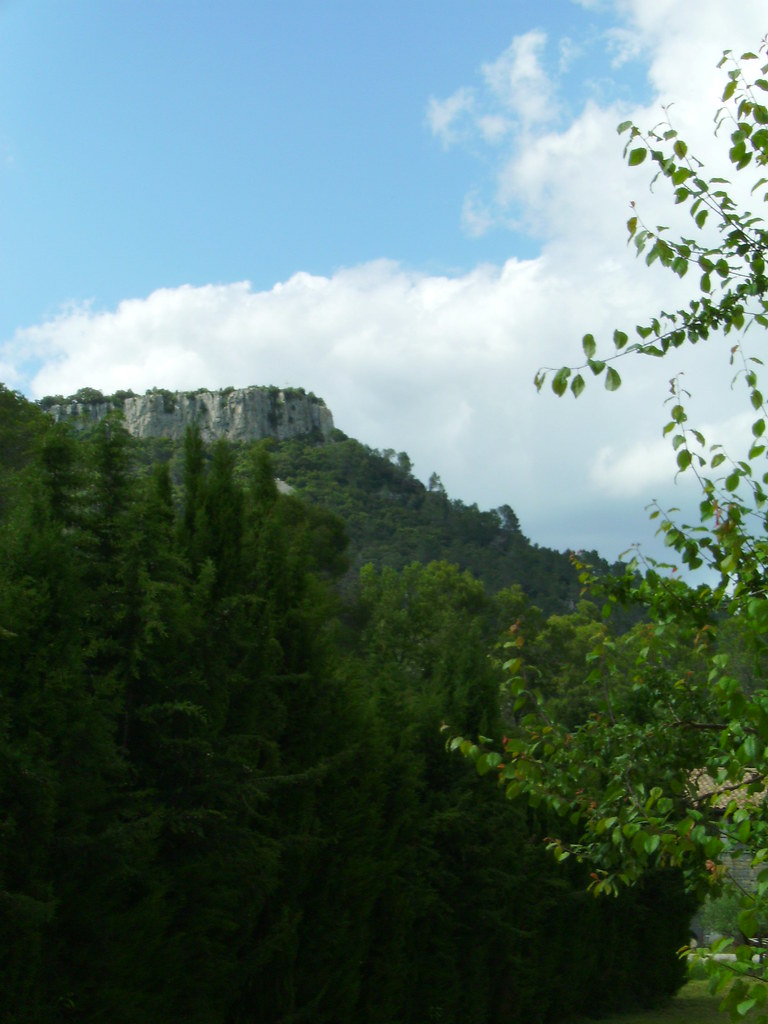
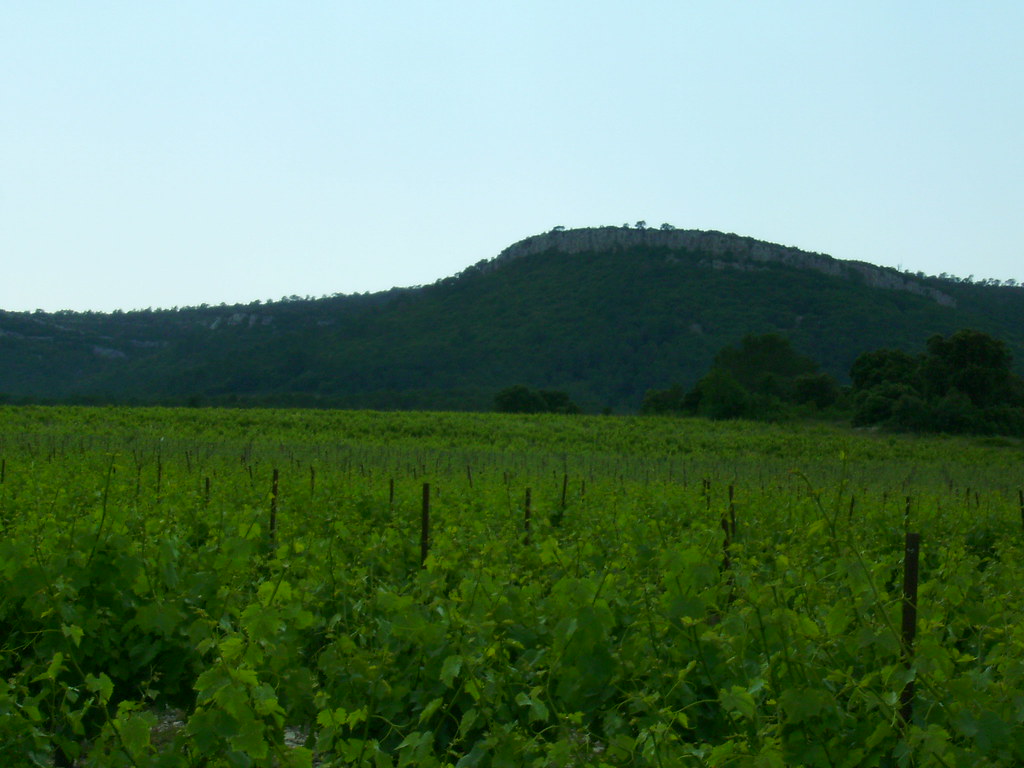
On Wednesday, Philippe took me out to the village of Pic-St-Loup. This is about 35km outside of Montpellier, away from the coast, and into the hillsides. As we drew near, the vegetation became more sparse and dry in appearance, and the hills more dramatic and full of cracked rocks and jutting craigs. As we entered Pic-St-Loup proper, the mountains to our left were amazing – towering peaks along a high plateau, with a cut, or canyon between two of the highest of the points.
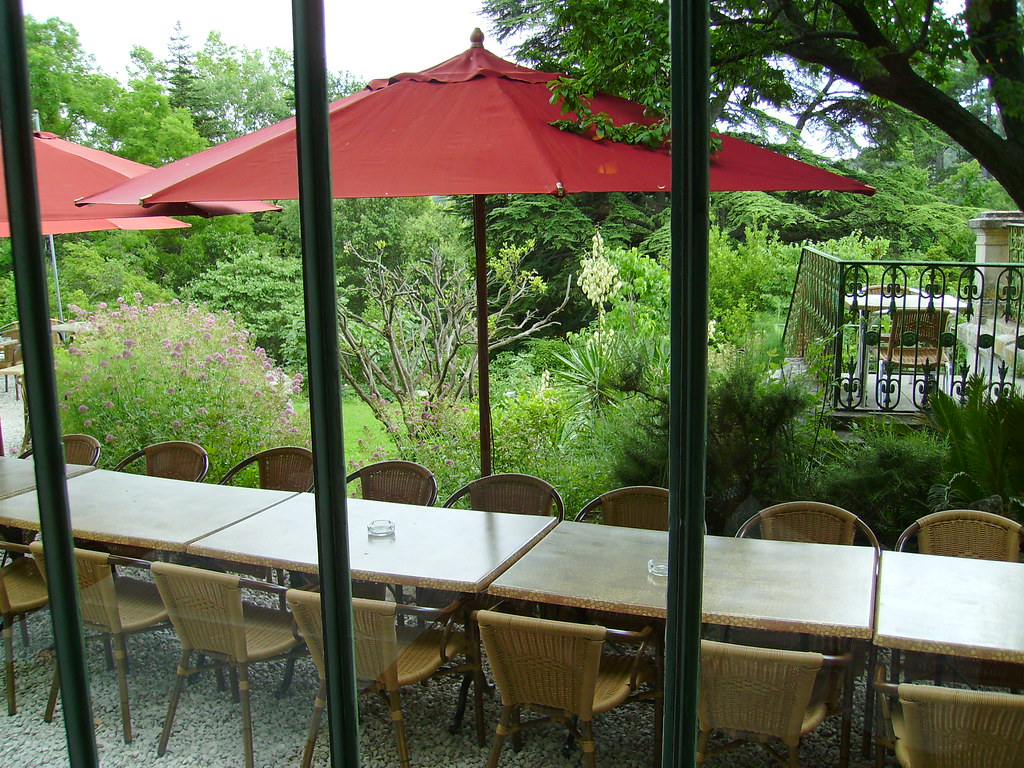
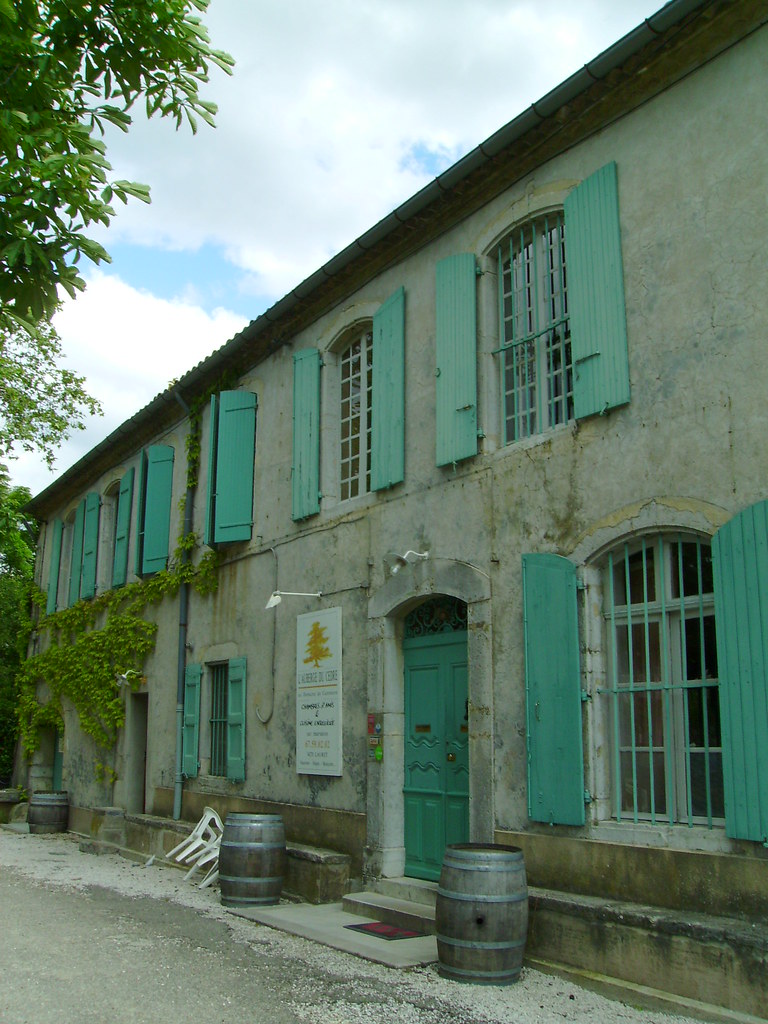
As we were late in the day, it was difficult to secure appointments with the Domaines which reside in this area. We stopped briefly into the Chateaux de Cazeneuve, (www.cazeneuve.net) which is a beautiful small estate located midway up the slopes above the village. They were not undertaking tasting at that time, but suggested that they would be pouring their wines at the 1er Anniversary of ‘L’Atelier’ (a wine bar) in Montpellier that very evening. Since Philippe had been too hurried to have anything at all to eat for lunch, we ordered some water and Philippe ordered some locally-cured ham to eat in the gardens of the L’Auberge du Cedre (www.auberge-du-cedre.com) located across the gravel path. This is a gorgeous place – leafy and green with gardens, filled with blossoms of every kind – it has a view of the escarpments above the valley, and vines just across the plaza. The Auberge has a small kitchen, and turns out very good food – in addition, it has a cellar from which it can sell the wines of the domaines in the area – so if you call an estate, and they are not open, you can purchase from the cellars of the Auberge instead. With a swimming pool, hiking trails in the hills, a court for playing boules, and an outdoor table for playing ping-pong, I could easily imagine spending some serious time here somewhere in the future.
We had to head back to Montpellier, and stopped at a Caviste, or wine shop near Les Arceaux (the ancient Roman aqueduct.) (Les Cave des Arceaux – www.cave-arceaux.com) This caviste sells many of the best wines of the region, and he also can fill people’s bottles from bulk wines which he keeps in the back of the cellar. He was doing just that for some local people. They gave me a bit of shit for not speaking French, so I started to talk in the small amount of French which I am able. (Usually here, whenever I try to speak French, my speech is so bad that they come right back at me in English…) So, I did okay, could understand them mostly, and when I spoke, they sometimes had to correct my pronunciation, but generally I can get by okay – I know that I do not speak in the correct tense all the time, nor with the correct conjugation, but hey, whatever!
I told my very first joke in French, (merci to Pierre, with whom I used to work on a Yacht in the Caribbean / South America long, long ago,) and got a laugh, so that is good! Basically; “A person who speaks two languages, we call Bilingual. A person whom speaks three languages, we call Trilingual. But do you know what we call someone who speaks but one language?” To which the answer is; “An American!” (followed by great chortling and laughter… (well, the French are not great chortlers, nor laughers…))
My favorite site nearby was the area under Les Arceaux for “Les Bollistes” or the bowlers of Petanque; the relaxed, southern French pastime version of Bocce. Petanque does not require special, regimented courts, just a shady, flat space of gravel, with a glass of rosé or pastis close at hand.
After, we moved for a bit to the anniversary party for ‘L’Atellier’ wine shop, (see the 6-4 post, of which this is an expansion of the same day...) with amazing oysters, escargots, clams, and other appetizers paired with great wines. I was greeted with a glass of rosé with two ice cubes in it, which was perfect, considering the warm afternoon. (I will never be shy of adding ice to rosé again!) There were three chateaux pouring their wines, including Chateaux de Cazeneuve, as well as young Julien Chapel from Saint Daumary, (also in Pic-St-Loup,) and his companion, who expecting their first child. Their wines were beautiful; the blanc floral and cooling – the red was very serious, and new-world in style, while retaining the herbal and aromatic sense of the region. Also, I met a vigneron who had been to the Hospice du Rhone for the festival there, pouring his wines – “It was a disaster!” he said – “Me, pouring my wines for thousands of people, and talking to them!!” I sense that it was not a total disaster; he seemed to be pleased that he had been, and remembered the mechanical bull at Big Bubba’s Bad BBQ. I am sure that, though they like to play (bullfighting,) with the bull plenty in the south of France, they probably do not have opportunity to tangle with a mechanical bull on many occasions!
More Pic-St-Loup photos at my flickr.com account: http://www.flickr.com/photos/18097654@N05/sets/72157605570104068/
Thursday, June 12, 2008
Saint Georges d'Orques
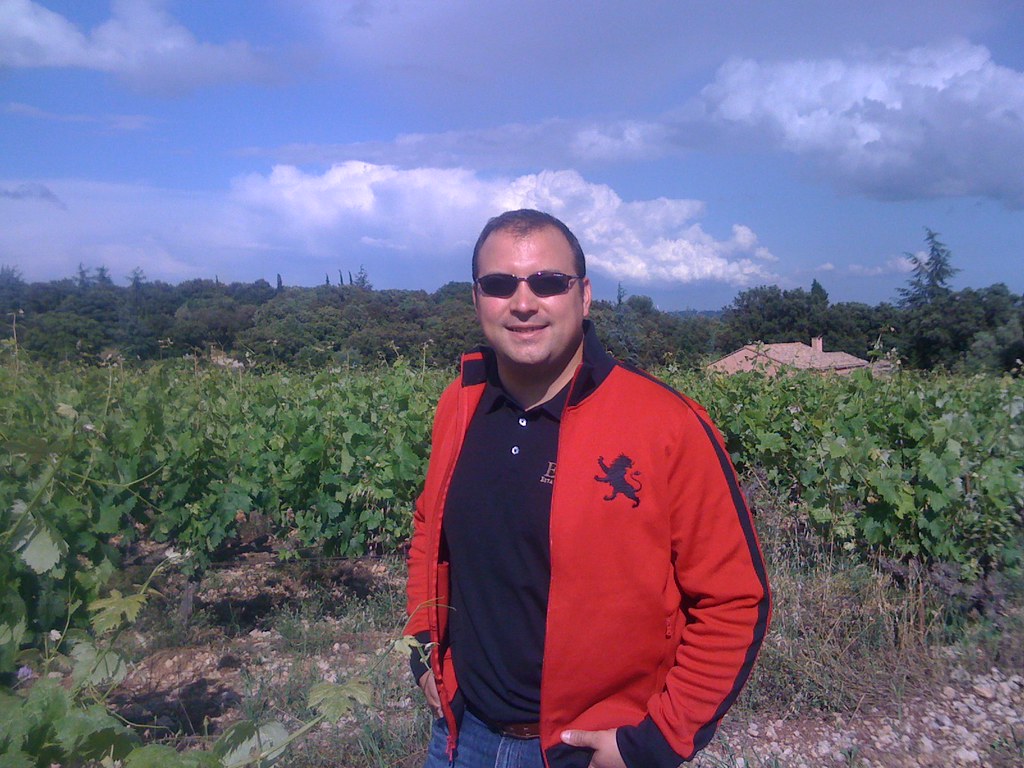

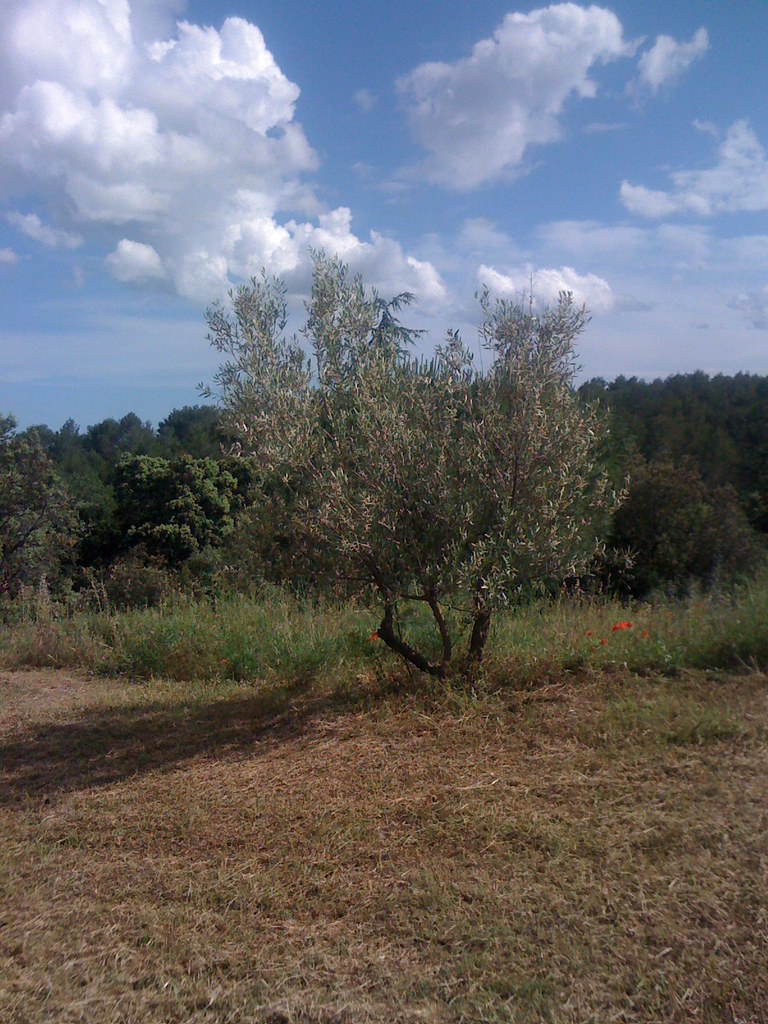
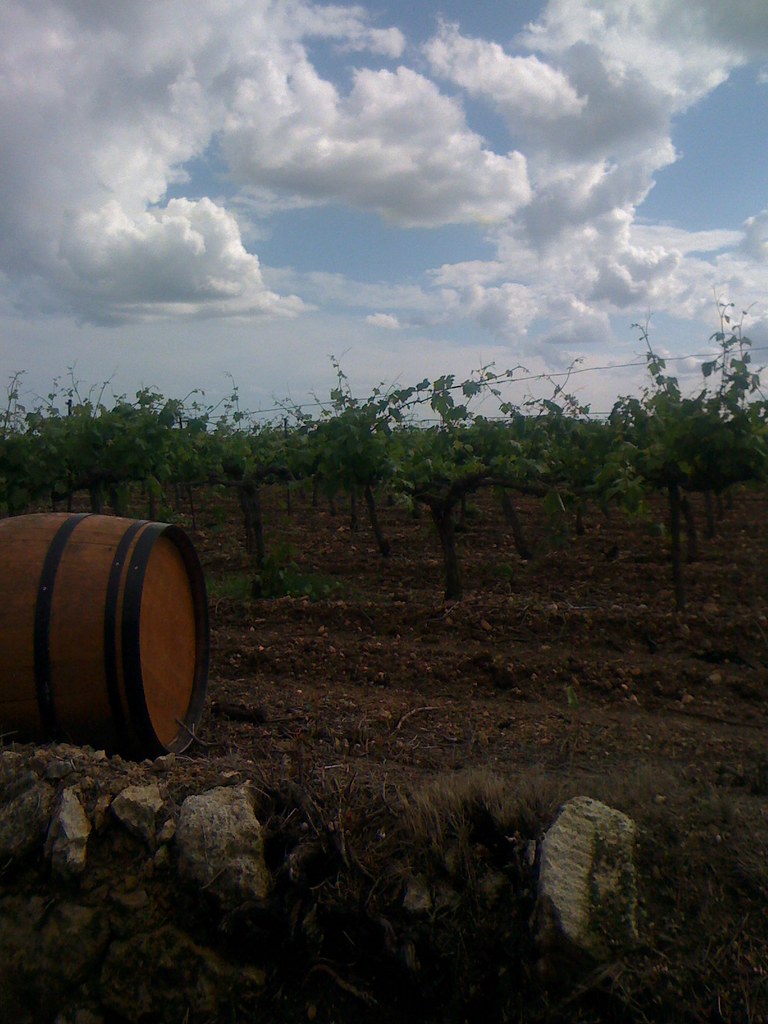

One day, Philippe took me into the vineyards around Montpellier to get a sense of the winegrowing that takes place around the city. Montpellier is at the heart of the Coteaux de Languedoc – one of the largest winegrowing regions in France. The nearest region to Montpellier is the St-George-d’Orques, within sight of the sea, from any hill. They grow white, red, and rose wines here – I believe that Grenache is a major part of the red and whites, with Syrah, Mourvèdre, making up the reds, with some Carignane and Counoise as well. The whites also take in Roussane, Marsanne, and some Viognier.
We stopped first at Chateau de L’Engarran, an impressive country estate with nearly 300 acres under vine. They are a relatively large winery for the region, and produce very solid rose wines. I enjoyed their whites and red as well, but the most expensive cuvees seemed over-worked and a bit tired – the white a touch toward oxidized, and the red very oak driven, with American oak prevalent. They had a rose from both a free-run process and from a drain down of juice from a vat of crushed fruit. The former was delicious; pale purple and filled with aroma and soft on the palate. The other was more herbal, but still delicious – just a touch of tannin, and loads of floral and herbal character.
The Domaine is owned by two sisters, and from the photographs on display, they throw some amazing parties! They had just finished the regional St-George-d’Orques springtime festival, where people can walk from domaine to domaine through the picturesque roads and sample wine and food at each of the 7 domaines. (Unfortunately, the weather this year chose not to cooperate, so they said that not too many people showed up, and those who did were in their automobiles!) In the autumn, the estate throws a party in their extensive and gorgeous gardens, complete with hired actors in 17th century dress, to evoke the era in which the Domaine was established, and copious amounts of food and wine!
The second winery that we stopped at was called Domaine de la Prose. This was obviously a smaller estate, and their vineyards are spread gently along a long approach slope leading to the winery / domaine, with plenty of wild vegetation and semi-feral olive orchards on the approach. The wildflowers around the area are amazing, the poppies, or coquilles were on show in a way that people here say that they have never seen until this year. From the top of their slope, one can view the Mediterranean in the far distance, just a glimpse of azure flashing, past fields of green vegetation.
Bertrand, the son of the owners greeted us. He has studied winemaking in Bordeaux before working stages in Bourgogne, Corsica, and South Africa. He a few of their wines for us – gorgeous rose, perfectly beautiful Vermentino blanc, and intensely fragrant red wine from Cinsault, Syrah, and Mourvedre. Everything inside this winery was well-done and tidy, but on the exterior, there was a gracious squalor to the state of the vineyards. The vines themselves appeared well-attended, with proper shoot thinning and moderate vigour. But beneath the vines, in the cobbled stones of the vineyards, hundreds of different flowering and creeping ‘weeds’ or companion plants were growing side by side with the vines.
Bertrand said that they don’t farm according to ‘biodynamic’ principles exactly, but rather are somewhat homeopathic – they combine different herbs and composts into the sprays that are applied to the vines, to give them vigour and strength and resist diseases which could otherwise overtake the vines. As we talked, and I told him that I was in Montpellier to attend a conference at SupAgro, he said that often the students would come out from the university, and they would laugh at his rock. When I asked him which rock, he showed me a large, red standing stone between the Cinsault vineyard and the winery. “Before the stone, I would have problems in the cellar with the wines from this vineyard. I had a consultant visiting, who is familiar with these things, and he told me to place a stone there. Ever since; no problem in the cellar.” And so, there you have it!
The wines were really great – if anyone reads this with the power to import wines to the Etats-Unis; be advised that this could be a great estate to be involved with, and at much less than some of the Rhone wines! Just make sure to send me a few cases every year, okay?
Wednesday, December 28, 2005
It's 2006. Do you know where your food is?
I dashed through the last few weeks before the holidays, working long hours to prep wines for bottling, getting tanks topped as much as possible, and making some final blend decisions for 2004 reds that will bottle in March. We actually bottled 2004 Chardonnay right up until Thursday evening at 6pm when I left to make it (late) to KLC's office party in Paso Robles, and start the Holiday season.
The winery is shut down, at least as far as production goes, from now until January 2nd. This has been great, I spent the first day with KLC taking a long, beautiful hike on the mountain ridgetops above the city, where you can see away to the ocean on one side, and over into the Salinas & California valleys on the other; even the Temblor range, thrust up by the San Andrea's Fault is visible from there.
KLC is back at work, and I am spending my time catching up on some reading. I finished MFK Fisher's "An Alphabet for Gourmets" yesterday, which I have been working on for a few weeks now. Spectacularly well written, as she always is. I am now making my way through a stack of wine industry periodicals that have been piling up since harvest!
One article discussed the FDA's Bioterrorism act. If you have not yet heard about this piece of rulemaking, it has already begun to affect the foods and beverages that you eat and drink every day. It will have huge implications for the company that I work for, as well as for our clients, customers, transporters, suppliers, growers, and distibutors.
The basic idea of the the provision, passed in 2002 is that a record of every ingredient, material, packaging supply, etc... has to be tracked from start to finish, even including the transport of said materials. These records have to be immediately available to inspectors, (the regulation requires a full accounting be available within 24 hours notice.) Every winery with more than 11 employees will have to be fully compliant by June of this year. Non-compliance will mean that the non-compliant products would be pulled from the shelves and destroyed!!
For a winery like ours, making wine for many different clients, using chemicals provided sometimes by the client, sometimes from our own stock, we need to track to the gram every lot number of every chemical and where it came from, who transported it, when it was produced and the provenance of every ingredient used in its production. Now multiply this traceability by nearly one-hundred clients, many different chemical additions, suppliers, origins of lots, and transportation of those chemicals to our plant. And then imagine blending multiple wines together that may have been produced in many different facilities. The paperwork alone becomes mind-numbing. And it will be still more bewildering for even larger companies, like Diageo and Constellation.
What does this mean for a small winery that grows all of its own fruit? Well, any chemicals or nutrients (sulfur, compost, micronutrients, etc...) that go onto the crop have to have complete traceability of the lot number, and transport from the manufacturer all the way through to the end user. Much of this is already in place in California, as registered agricultural chemicals are required to be reported monthly, it would just take a few tweaks. But trucking of the fruit to the winery has to be tracked, as well as origin and lot numbers for SO2 (Germany or Italy,) tartaric acid, (China, Italy,) tannin additions, (France, Australia) yeast (Canada, Netherlands, Belgium.) As the wine is finished, even filtration aids (Germany, USA) bentonite (USA) and other fining agents may be added.
Supposing you used all your own fruit, grown entirely organically, you trucked it to the winery yourself, you did not add any chemicals of any kind, let the native yeast conduct fermentation, etc... You still have to track the origin of the barrels (France, USA, Hungary) SO2, whether from KMBS or liquid SO2, corks (Portugal, Spain) and glass bottles (USA, Mexico, France, Italy.) As you can see, wine production is a complex international web, even at the simpest levels.
I imagine that this is going to extend to the rest of the food & beverage and agricultural system as well. All this red tape is designed to maintain the security of the United States' food supply, but in fact it really just exposes the vulnerability of the present, globally dependent system. The chain, especially for processed foods, extends out of the United States, with dependence on farmers in China, South America, Mexico, Canada, and elsewhere. Tampering at any point along the line can comprimise the safety of our food supply, and expose us to pathogens, poisons, or other dangers. As we scramble to become compliant in the wine industry, with relatively short production chains, and limited numbers of ingredients, it exposes the near impossibility of compliance for other parts of the food industry. And what will the stance be on regulation of suppliers outside of the United States? Does it mean a ban on food and beverage products that are not compliant in the same way?
Perhaps the fragility of a globally dependant system is one of the strongest arguments ever for knowing where your food comes from, and how it is produced. Plant a garden. Get to your local Farmer's Market. Talk to the people who grow and supply your food. You can have a very direct influence over how safely it is produced, the effect of agriculture on your local environment, and economically reward those who are striving to grow sustainably and produce the highest quality.
If you simplify your personal food chain of supply, you won't have to depend on the accuracy and honesty of industry or government to know that your family's food is safe!
The winery is shut down, at least as far as production goes, from now until January 2nd. This has been great, I spent the first day with KLC taking a long, beautiful hike on the mountain ridgetops above the city, where you can see away to the ocean on one side, and over into the Salinas & California valleys on the other; even the Temblor range, thrust up by the San Andrea's Fault is visible from there.
KLC is back at work, and I am spending my time catching up on some reading. I finished MFK Fisher's "An Alphabet for Gourmets" yesterday, which I have been working on for a few weeks now. Spectacularly well written, as she always is. I am now making my way through a stack of wine industry periodicals that have been piling up since harvest!
One article discussed the FDA's Bioterrorism act. If you have not yet heard about this piece of rulemaking, it has already begun to affect the foods and beverages that you eat and drink every day. It will have huge implications for the company that I work for, as well as for our clients, customers, transporters, suppliers, growers, and distibutors.
The basic idea of the the provision, passed in 2002 is that a record of every ingredient, material, packaging supply, etc... has to be tracked from start to finish, even including the transport of said materials. These records have to be immediately available to inspectors, (the regulation requires a full accounting be available within 24 hours notice.) Every winery with more than 11 employees will have to be fully compliant by June of this year. Non-compliance will mean that the non-compliant products would be pulled from the shelves and destroyed!!
For a winery like ours, making wine for many different clients, using chemicals provided sometimes by the client, sometimes from our own stock, we need to track to the gram every lot number of every chemical and where it came from, who transported it, when it was produced and the provenance of every ingredient used in its production. Now multiply this traceability by nearly one-hundred clients, many different chemical additions, suppliers, origins of lots, and transportation of those chemicals to our plant. And then imagine blending multiple wines together that may have been produced in many different facilities. The paperwork alone becomes mind-numbing. And it will be still more bewildering for even larger companies, like Diageo and Constellation.
What does this mean for a small winery that grows all of its own fruit? Well, any chemicals or nutrients (sulfur, compost, micronutrients, etc...) that go onto the crop have to have complete traceability of the lot number, and transport from the manufacturer all the way through to the end user. Much of this is already in place in California, as registered agricultural chemicals are required to be reported monthly, it would just take a few tweaks. But trucking of the fruit to the winery has to be tracked, as well as origin and lot numbers for SO2 (Germany or Italy,) tartaric acid, (China, Italy,) tannin additions, (France, Australia) yeast (Canada, Netherlands, Belgium.) As the wine is finished, even filtration aids (Germany, USA) bentonite (USA) and other fining agents may be added.
Supposing you used all your own fruit, grown entirely organically, you trucked it to the winery yourself, you did not add any chemicals of any kind, let the native yeast conduct fermentation, etc... You still have to track the origin of the barrels (France, USA, Hungary) SO2, whether from KMBS or liquid SO2, corks (Portugal, Spain) and glass bottles (USA, Mexico, France, Italy.) As you can see, wine production is a complex international web, even at the simpest levels.
I imagine that this is going to extend to the rest of the food & beverage and agricultural system as well. All this red tape is designed to maintain the security of the United States' food supply, but in fact it really just exposes the vulnerability of the present, globally dependent system. The chain, especially for processed foods, extends out of the United States, with dependence on farmers in China, South America, Mexico, Canada, and elsewhere. Tampering at any point along the line can comprimise the safety of our food supply, and expose us to pathogens, poisons, or other dangers. As we scramble to become compliant in the wine industry, with relatively short production chains, and limited numbers of ingredients, it exposes the near impossibility of compliance for other parts of the food industry. And what will the stance be on regulation of suppliers outside of the United States? Does it mean a ban on food and beverage products that are not compliant in the same way?
Perhaps the fragility of a globally dependant system is one of the strongest arguments ever for knowing where your food comes from, and how it is produced. Plant a garden. Get to your local Farmer's Market. Talk to the people who grow and supply your food. You can have a very direct influence over how safely it is produced, the effect of agriculture on your local environment, and economically reward those who are striving to grow sustainably and produce the highest quality.
If you simplify your personal food chain of supply, you won't have to depend on the accuracy and honesty of industry or government to know that your family's food is safe!
Subscribe to:
Posts (Atom)