
The 2008 vintage has been really difficult for growers throughout the Paso Robles region. Frost early in the year, below average rainfalls for 2 years running, and difficult weather a flowering made for stunted and late shoot growth, poor fruit set, and really uneven crop ripeness. As we got into harvest, fruit flavor profiles and tannin development lagged way behind sugar levels, forcing us to leave fruit on the vine longer in hopes that tannin and flavor would catch up and reach equilibrium.
As we moved through the early stages of harvest, we found that we were harvesting at approximately 30% below our crop estimates – a dramatically short crop. We scrambled to source additional Chardonnay for some of our programs, and were able to secure some very nice looking fruit from Santa Barbara County, as well as the Arroyo Grande and Edna Valley AVA regions of southern San Luis Obispo County.
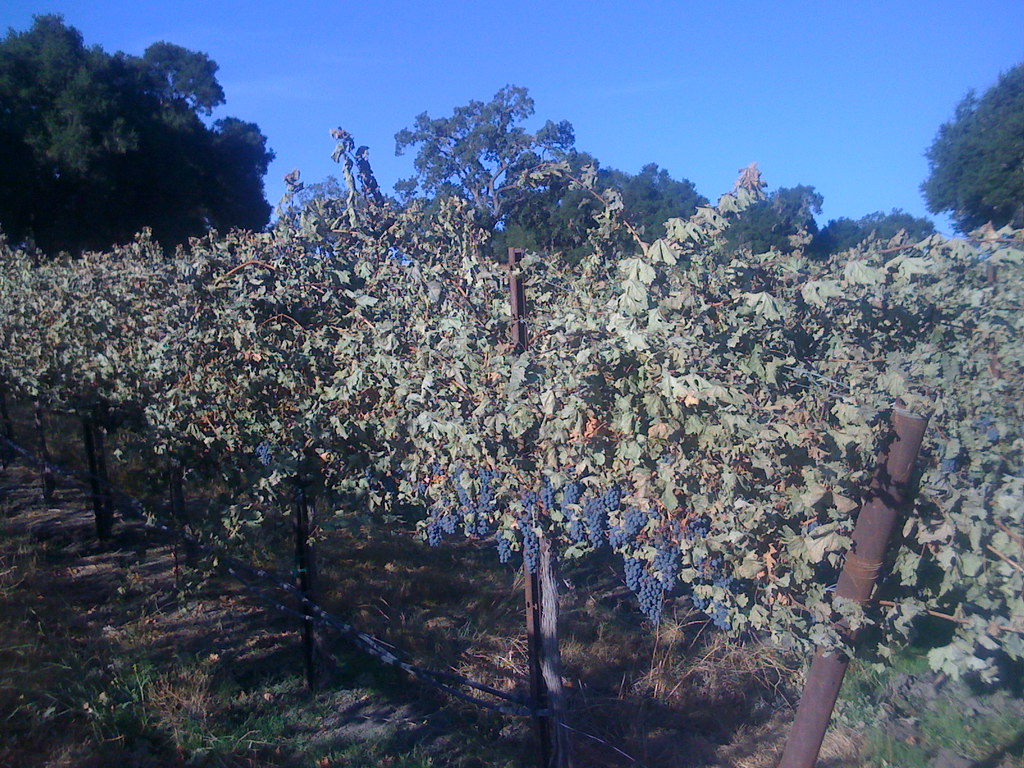
As reds started to come in, the silver lining to the 2008 vintage became apparent as the fruit crushed up into deeply colored fermentations – the loose clusters caused by extreme shatter early in the year left lots of sunlight and air exposure on the fruit, helping to build anthocyanin (color pigments) in the skins of the grapes, and reducing fungal disease pressure.
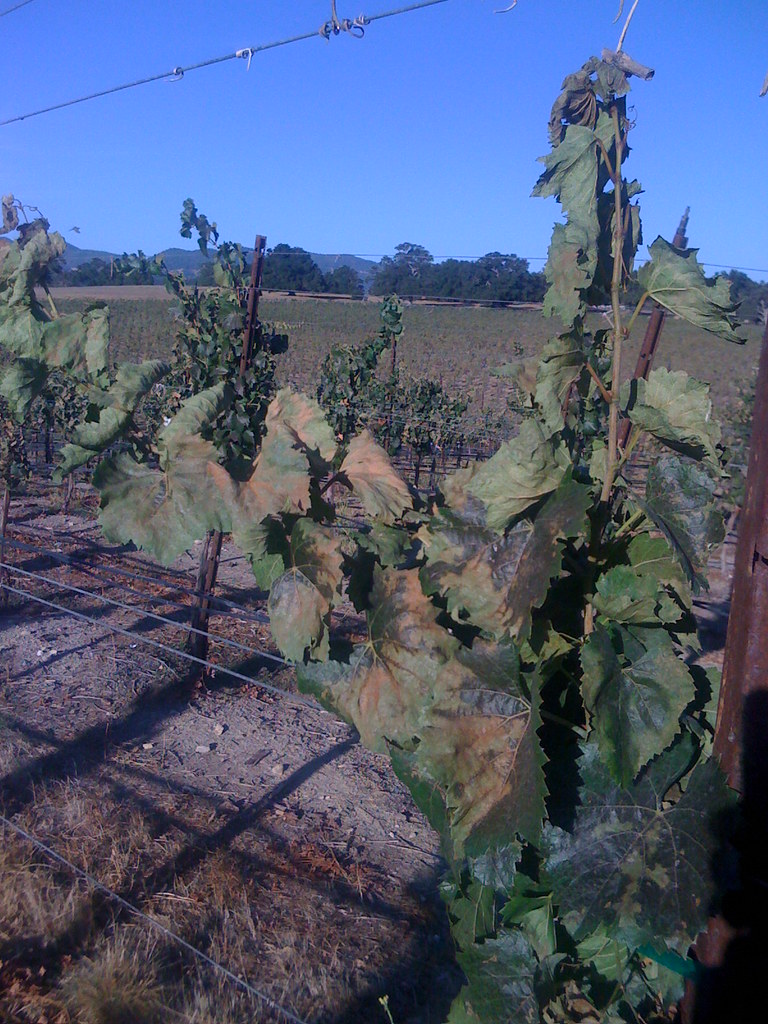
Just when we were becoming accustomed to a leisurely pace of ripening and steady flavor development, a series of extremely cold nights set in. We had more than a week of days with highs in the 70’s and 80’s, but overnight lows dropping slightly below freezing. Several areas measured 27 degrees, which is about lethal for a grape leaf. Many of our growers started running their overhead sprinklers during the nights, to buy a few degrees of protection from the frost – one of our growers had so much ice build up on his vines that the first three rows of trellis buckled and bent over under the weight!
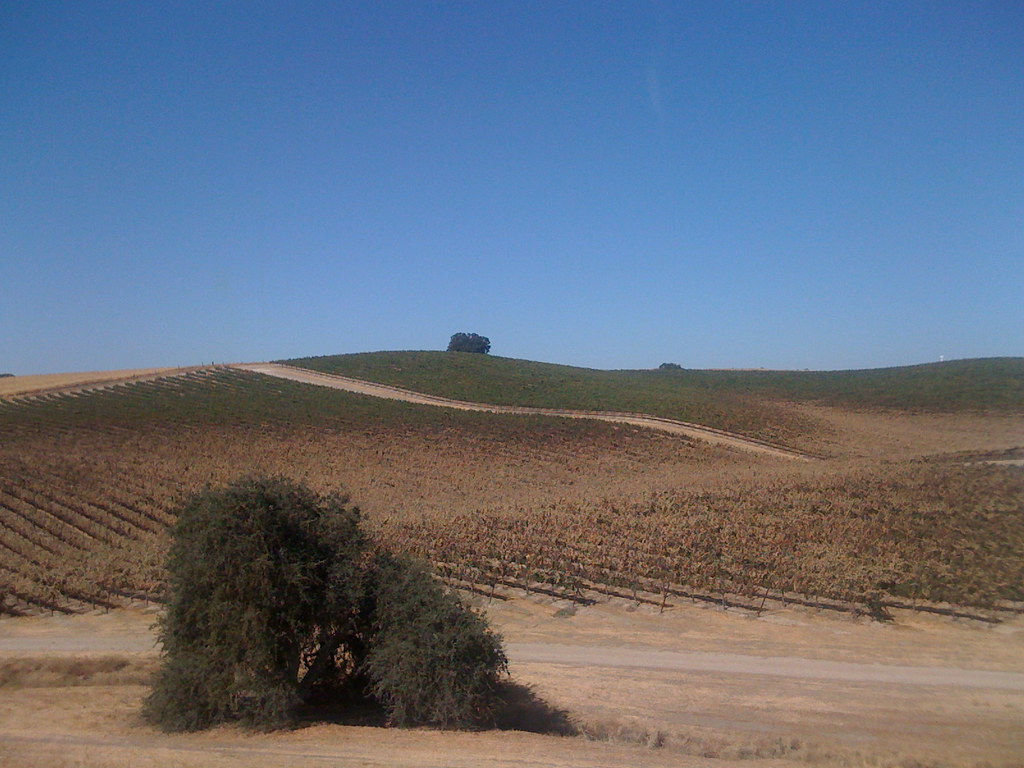
Most affected were low-lying areas where the cold air could not drain away. In many of the vineyards, you will see a pattern of frost-killed leaves in the low lying areas, or anywhere that the topography causes the air to pool up and stagnate.
We were really lucky in a lot of cases. Even within vineyards that had widespread damage, we mostly had some affected vines around the edges. Vineyards that were hit hard are basically done for the season. The cold actually causes water within the leaf cells to freeze, bursting them; walking in the vines after a freeze, the air smells a lot like fresh-cut grass, that vegetal, wet leafy aroma. Whatever stage of flavor development the vines were at prior to the freeze is just where they will stay; further time on the vine is only serving to dehydrate the otherwise unripe fruit.
At this stage, we are basically prioritizing the order that we bring in the rest of our fruit. Everything is about as ripe as it is going to get, just time to bring it in and get it started on a path toward what it will ultimately become.
Overall, I think we managed quality well in this vintage. I figure that about 10-15% of our red wine lots are of top quality, and I am really pleased with most of the white wines. Speaking with other winemaker friends, it sounds like we did better than the average in one of the most challenging vintages in recent memory.
http://flickr.com/photos/18097654@N05/sets/72157607089923402/